glenice_buck_designs_gardens

I think growing herbs is much easier than growing I think growing herbs is much easier than growing vegetables. However you do need to understand the differences between annual herbs and perennials herbs
MINT GETS ITS OWN POT.  Mint should come with a wa MINT GETS ITS OWN POT. 
Mint should come with a warning label. Left to its own devices in a garden bed, its roots will run wild, smothering nearby plants and taking over the space.How to keep it happy without the takeover:Grow it in its own container or dedicated isolated spot.Keep it in a shady location with reliable moisture.Extra Tip - Put a saucer under the pot in summer filled with water—it loves keeping its roots moist!
My Planting Process With over 25 years experience My Planting Process
With over 25 years experience in planting plants professionally I always follow the same steps for 4 plants or over 400 plants.Now the question is how many plants have I planted in that time ??
GARDEN TASKS FOR LATE WINTER  -Continuing on with GARDEN TASKS FOR LATE WINTER 
-Continuing on with the pruning of our deciduous trees and stone fruit still to be pruned.-The cutting back will continue with our ornamental grasses and perennials.-If you are pruning stone fruits then the key is to first remove dead, damaged or diseased wood. Then remove any lower branches (lift the canopy) and anything that’s considered extension (wayward) growth. Remove crossing branches, then thin out centre of tree so that sunlight can reach the internal sections of the tree when the tree is back in leaf. Some commercial growers also lop back tops so they are flat topped to give maximum light in to these areas. If you do flat top the top of your tree you will need to continue doing this every year.-Keep on top of the weeds and try to fertilise and mulch over the areas once weeded.-If you have broad leaf weeds in your lawns (the most common broad leaf weeds in lawns are clover, cape weed and bindi) treat with a broad leaf spray now before the growth starts. Other weeds such as paspalum, winter grass, nut grass will need to be treated with a selective herbicides. In warmer climates you could also start fertilising your lawn. We will aim to be doing ours in September when it is a little warmer.-In the veggie garden you can start prepping veggies ready for the spring summer crops. These could be started in pots that are stored under cover with some protection or in greenhouses. Some plants you could start would be Tomatoes, Cucumbers, Beans and Zucchinis. I’m also adding more leafy greens – I cannot get enough of these!-Check irrigation systems, make sure all systems are working, fix broken drippers, pop ups and joiners. Changing batteries of controllers if necessary. Ensure the systems are ready to go for when the hot weather hits.-If you have any water features or ponds now is a good time to empty out and clean if needed. If you manage to get this done before a shower of rain you could let the rain fill them back up.-Fix up or repair any hard landscaping parts of the garden such as paths, wall, gravel or pebble areas.
OUR COLLECTION OF GARDEN BOOKLETS  We have three G OUR COLLECTION OF GARDEN BOOKLETS 
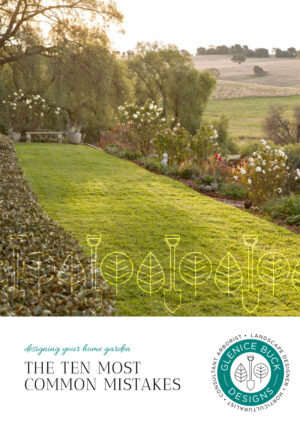
We have three Garden Booklets available for you to purchase from our website ( link in bio) Our Booklets aim to help the home gardener learn how to design their outdoor space with step by step guides.  They aim to be very practical and hands on.  We have developed them as we found through our workshops and client consultations people are really keen to learn more and be involved with the total garden design process. 🍃Booklet 1- An Introduction To Your Garden - How to Learn the Art of Gardening - Digital Copy = $9.95 or Hard Copy = $14.95This Booklet is based on getting to know your garden on every level.🍃Booklet 2 – Designing Your Home Garden - The Ten Most Common Mistakes –Digital Copy = $14.95 or Hard Copy = $19.95 ( including postage)This Booklet explains the most commonly made mistakes gardeners make when they are starting to create their gardens.  We aim to highlight these mistakes so you can avoid making them.🍃Booklet 3 - Designing Your Home Garden – The Ten Steps For Garden Design - Digital Copy = $ 49.95 or Hard Copy = $59.95 ( including postage)This Booklet outlines the most important steps you need to take when creating a beautiful garden design, for your home. We have broken down the design process into ten elements that you need to understand to create a successful garden design.  We will give you a guide of where to start, how to observe and work with your site and its conditions, we will then illustrate different types of designs styles, layout and planting.All books are available on our website in a digital link or as a hard copy that I will mail out to you.
ANSWERING YOUR GARDEN QUESTIONS.... QUESTION  Wha ANSWERING YOUR GARDEN QUESTIONS....QUESTION 
What would be your biggest tip when it comes to laying out the plants. I have a list of my favourites that are suited to our area however I’m not sure how to set them out and select quantities. I already have garden beds ready to go. MY ANSWER 
It is good that you have a short list of plants to choose from. That is a very good place to start. I would then think about what you are trying to achieve. Do you need to screen out neighbours? Do you need to let in winter light?, Do you need to soften fence lines, walls, structures or side of houses? Do you need a focal point? I would always try to select groups of the same species, plant out in groups of 3 or 5 . I would aim to try not to select one of everything. Using less species but repeat planting and then use on mass. Selecting plants for their leaf shape, colour and texture rather than just for flowers. Then consider their heights and forms or habits. Keeping taller plants towards the back of beds with medium and then low plants in front. Creating the layers will give you more depth. If the plants are viewed from all sides you could use taller plants through the centre with medium and low shrubs planted out towards the edges. Before planting out , look at the garden beds from all angles to see what it will look like.
What is a 200mm or 8 inch pot?  Here is a guide as What is a 200mm or 8 inch pot? 
Here is a guide as to what you should expect when you purchase a 200mm potted plant.
PLANTS IN 140MM / 6 INCH POTS What you should exp PLANTS IN 140MM / 6 INCH POTS
What you should expect to purchase when you buy a 140mm plant pot
NORTH POINT MARKER ON POTTED OR BAGGED TREES NORTH POINT MARKER ON POTTED OR BAGGED TREES
Continuing on from this week's substack post ..... Continuing on from this week's substack post .....PART TWO  - Explaining Plant Pot SizesOnceThe next pot sizes above 200 mm are 300mm and 45 Litre. However  bigger is not always better. 
Understanding the characteristics of your plants species you are buying is also important. For example purchasing a soft wooded herbaceous perennial is very different from purchasing a deciduous tree. If you understand what type of growth your plant species has you will be able to make a more informed decision when selecting your plants. A fast-growing, soft perennial like a Salvia or Gaura might fill out a 200mm pot in a matter of weeks. On the other hand, a slow-growing hardwood like a Japanese Maple or Buxus might spend a year or two in that exact same pot size to build trunk caliper and root density
Follow on Instagram
Logo Logo Logo Logo Logo
  • Home
  • About
  • Services
    • Landscape Design
    • Arboricultural Consulting
    • Horticultural Advice
    • Garden Management
    • Virtual Garden Consultations
    • Garden Coaching
    • Garden Workshops
    • FREELANCE GARDEN WRITING
  • Projects
  • Shop
  • Blog
  • Contact
  • 0417 077 386
  • Home
  • About
  • Services
    • Landscape Design
    • Arboricultural Consulting
    • Horticultural Advice
    • Garden Management
    • Virtual Garden Consultations
    • Garden Coaching
    • Garden Workshops
    • FREELANCE GARDEN WRITING
  • Projects
  • Shop
  • Blog
  • Contact
  • 0417 077 386

Printed books

Showing all 3 results

  • Printed - Designing your home garden - Ten steps for garden design Add to cart
    Printed – Designing your home garden – Ten steps for garden design
    $59.95
  • Printed - How to learn the Art of Gardening Add to cart
    Printed – How to learn the Art of Gardening
    $19.95
  • Printed - The ten most common mistakes to avoid when designing your own home garden Add to cart
    Printed – The ten most common mistakes to avoid when designing your own home garden
    $14.95

Glenice Buck Designs (GBD) is an award winning horticultural business offering landscape design, garden management, consultant arboricultural services, horticultural advice both onsite and virtually, garden coaching, garden workshops and freelance garden writing.

About Us
  • Glenice Buck
  • Phillip Davies
  • Services
  • Projects
  • Shop
  • My Account
  • Privacy Policy
Contact details

Phone: 0417 077 386

Email: glenice@glenicebuckdesigns.com.au

Mail: PO Box 735, Young NSW 2594